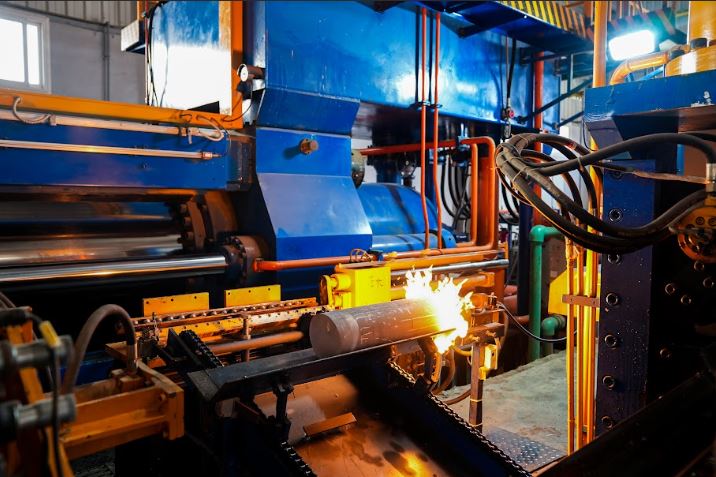
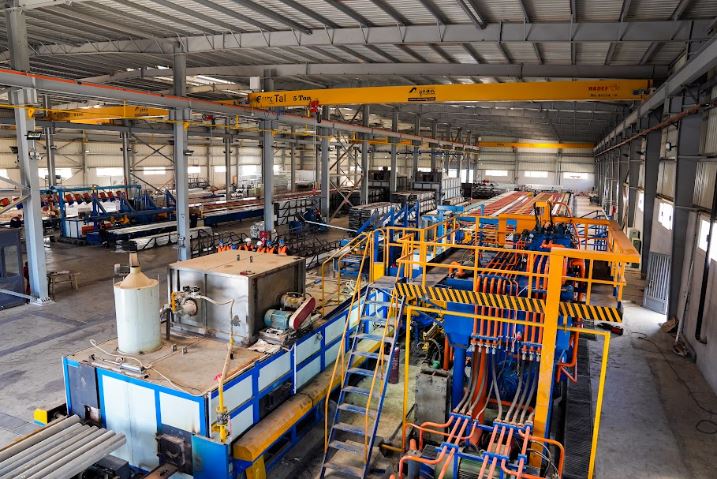
Billets are semi-finished metal products, typically with a square or round cross-section, that are further processed into finished goods such as bars, rods, or wire. Billet manufacturing is a critical step in the metal production chain, especially in steel, aluminum, and copper industries.
1. Raw Material Selection
Billet manufacturing begins with the selection of raw materials such as scrap metal, sponge iron (DRI), or molten metal from primary production. The quality of the final billets depends heavily on the purity and composition of these raw materials.
2. Melting Process
The chosen materials are melted in a furnace — typically:
Electric Arc Furnace (EAF) for steel
Induction Furnace (IF) for smaller-scale operations
Blast Furnace followed by Basic Oxygen Furnace (BOF) for large-scale steelmaking
Alloying elements may be added at this stage to achieve the desired chemical composition.
3. Refining and De-slagging
The molten metal undergoes refining to remove impurities (like sulfur and phosphorus) and to adjust the carbon content. Slag, a byproduct formed during melting, is removed periodically.
4. Continuous Casting
The refined molten metal is poured into a continuous casting machine, where it is cooled and solidified into billets. This process ensures uniformity in shape, structure, and mechanical properties.
Billet sizes typically range from 100 mm × 100 mm to 160 mm × 160 mm.
Lengths vary from 6 meters to 12 meters, depending on customer specifications.
5. Inspection and Testing
Billets undergo various non-destructive and destructive tests to check for:
Surface cracks
Internal defects (via ultrasonic testing)
Chemical composition (spectrometry)
Mechanical properties (hardness, tensile strength)
6. Storage and Dispatch
Finished billets are stacked, tagged, and stored under controlled conditions to prevent rusting (especially for steel) before being shipped to rolling mills or downstream processing plants.