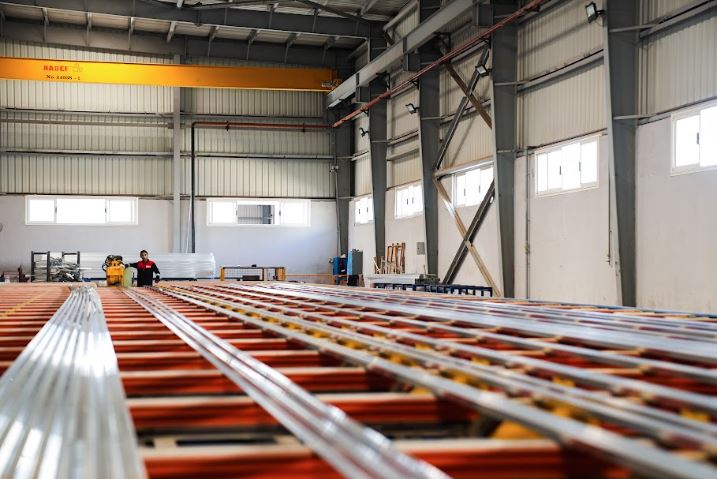
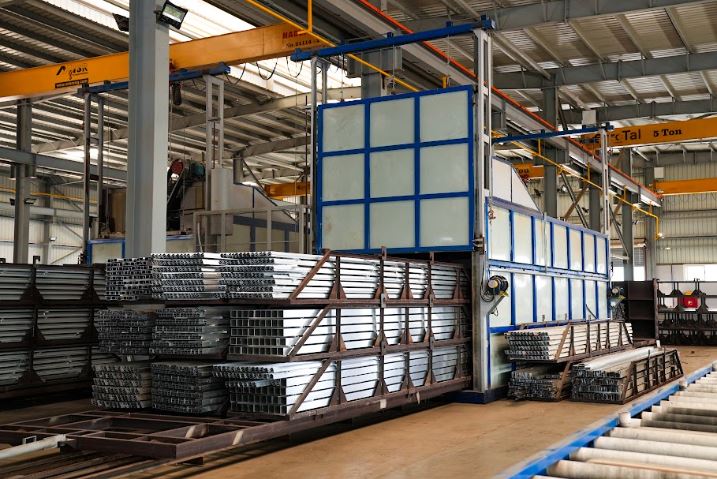
Surface finish refers to the texture, appearance, and quality of the surface of aluminum products after they have been formed or processed. Surface finishing in aluminum is crucial not only for aesthetics but also for improving corrosion resistance, wear resistance, and preparing the surface for further treatment such as painting or anodizing.
1. Importance of Surface Finish in Aluminum
Aesthetic appeal – for architectural or consumer-facing products
Functional performance – better corrosion and abrasion resistance
Adhesion improvement – for coatings, adhesives, or paints
Dimensional control – especially in precision applications
2. Common Surface Finishing Methods for Aluminum
a. Mechanical Finishing
Polishing: Smooths and brightens the surface; used for decorative applications.
Buffing: Produces a mirror-like finish.
Brushing: Creates a uniform, linear texture; often used in consumer goods and architecture.
Grinding or Sanding: Used to remove imperfections or prepare for further treatment.
b. Chemical Finishing
Etching: Removes surface impurities and produces a matte finish.
Bright Dipping: Creates a glossy, reflective finish using a mixture of nitric and phosphoric acid.
c. Electrochemical Finishing
Anodizing: A widely used method where aluminum is oxidized electrochemically to form a durable, corrosion-resistant oxide layer. It can be clear or dyed in various colors.
Type I: Thin film, chromic acid-based
Type II: Moderate thickness, sulfuric acid-based (decorative)
Type III (Hard Anodizing): Thick and wear-resistant for industrial use
d. Coating Processes
Powder Coating: A dry finishing process that applies colored powder electrostatically, then cures it under heat.
Liquid Painting: Conventional wet paint method for color and protection.
Electrophoretic Deposition (E-coating): Used for uniform coating, especially in automotive and electronics.
e. Conversion Coatings
Chromate Conversion Coating: Enhances corrosion resistance and adhesion for paint.
Non-Chromate Alternatives: Eco-friendly coatings gaining popularity due to environmental regulations.
3. Surface Finish Quality Parameters
Roughness (Ra): Measured in microns or microinches; indicates the smoothness of the surface.
Gloss: Degree of light reflectance; high gloss or matte.
Visual Appearance: Color, uniformity, and absence of surface defects like scratches, pitting, or stains.
4. Applications Based on Surface Finish
Surface Finish Type
Common Applications
Brushed Finish
Architectural panels, appliances
Polished or Buffed
Automotive trim, consumer goods
Anodized
Window frames, electronics casings
Powder Coated
Furniture, doors, machinery
Hard Anodized
Aircraft, marine, and industrial parts
Common Defects: Streaks, orange peel, corrosion spots, tool marks